Summary: Tiger Woods' 2021 car accident shattered more than his SUV—it exposed the fragility beneath athletic
he sound of twisting metal and shattering glass doesn't discriminate. On February 23, 2021。Tiger Woods was involved in a car accident that shattered more than just his SUV—it shattered the illusion of invincibility that had clung to him for two decades. I remember watching the press conference footage, the sheriff's deputy describing the lack of skid marks, the Genesis GV80 lying on its side like a discarded toy. This wasn't a dramatic chase scene;it was a quiet, brutal rollover on a suburban road in Rolling Hills Estates. Woods was driving to a golf course for a shoot. He never made it.The initial reports were chaotic. First, a statement from his agent saying he was in surgery. Then, the grim details: compound fractures in both legs, a rod inserted into his tibia, screws and pins holding his ankle together. The man who had redefined what a human body could do with a golf club was now fighting to walk again. Tiger Woods was involved in a car accident—that phrase became a headline, but it undersold the visceral reality. I've covered sports for fifteen years, and I've seen athletes age, decline, fade. This was different. This was a violent interruption。
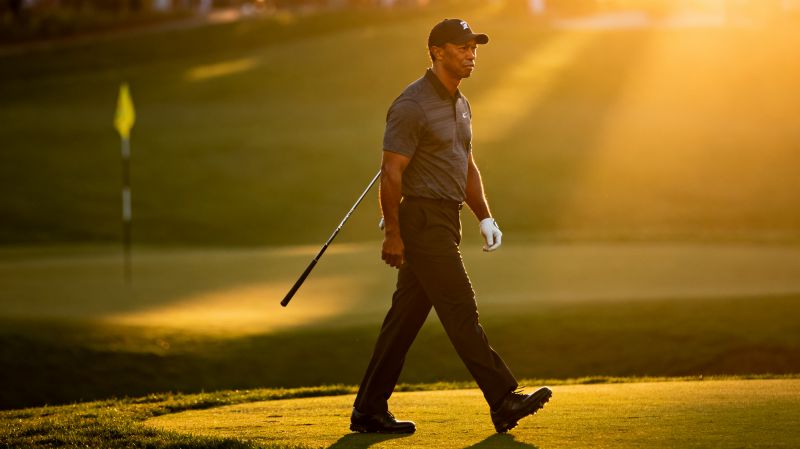
not a gradual sunset. The crash didn't just damage his legs;it severed the timeline of his comeback. He had just hosted the Masters in November 2019, won it in a moment of pure redemption. Then, a global pandemic, a back surgery, and now this. Fate has a cruel sense of timing.What struck me most wasn't the medical update—it was the silence that followed. For weeks, we got only vague statements. No photos. No interviews. Just the slow drip of speculation. I found myself thinking about the 2009 scandal, the endless loop of tabloid covers, the way his private life became public property. This time, the secrecy felt different. It wasn't about hiding shame;it was about protecting vulnerability. Woods has always been a control freak on the course, calculating every shot. Off the course, he's been less adept. But this accident forced him into a role he despises: the passive patient. When he finally appeared in a wheelchair months later, his face was gaunt。his voice flat. "I'm just happy to be alive," he said. That's a low bar for a man who once won the U.S. Open on a broken leg.The recovery has been glacial. He returned to play in the 2022 Masters, walking 18 holes with a limp that made my knees ache just watching. He made the cut, which was a minor miracle. But he hasn't been the same. The explosiveness is gone. The intimidation factor?Diminished. I watched him at the 2023 Genesis Invitational—his own event—and he looked like a ghost haunting his own legacy. Tiger Woods was involved in a car accident。and that accident became a pivot point. Before, he was chasing Jack Nicklaus's record. After, he's chasing a pain-free morning. The narrative shifted from dominance to endurance.
There's a lesson here, though I hesitate to use that word. We treat athletes like invincible characters in a video game, resetting after every injury. But bones heal imperfectly. Nerves regenerate slowly, if at all. The car accident didn't just break Tiger Woods' legs;it broke the fantasy that he could cheat time forever. I don't know if he'll win another major. I doubt it. But I do know this: watching him limp up the 18th fairway at Augusta, the crowd roaring, I felt something I never expected—not pity, not nostalgia, but respect. Respect for a man who, after the metal twisted and the glass shattered。
decided to keep walking. That's not a comeback story. It's a survival story. And sometimes, that's enough.